

Sciatica: Causes, Symptoms and How Chiropractic Care May Hel
Pain that travels from your lower back into your buttock or down your leg can affect almost every aspect of daily life. Walking, sitting, driving, exercising or even sleeping may become uncomfortable, and many people worry that the pain will never go away.
Sciatica is one of the most common causes of leg pain, yet it is often misunderstood. Contrary to popular belief, sciatica is not a diagnosis in itself. Instead, it describes a group of symptoms caused by irritation or compression of the sciatic nerve or one of the nerve roots that form it.
Although sciatica can be painful, most cases improve with appropriate conservative management. Identifying the underlying cause of your symptoms is the first step towards choosing the most suitable treatment and supporting your recovery.
At the Cabinet de Chiropraxie Marie Moyen in Luxembourg, every patient receives a comprehensive clinical assessment to determine whether their symptoms are consistent with sciatica, identify contributing factors and establish an individualised management plan.
What is sciatica?
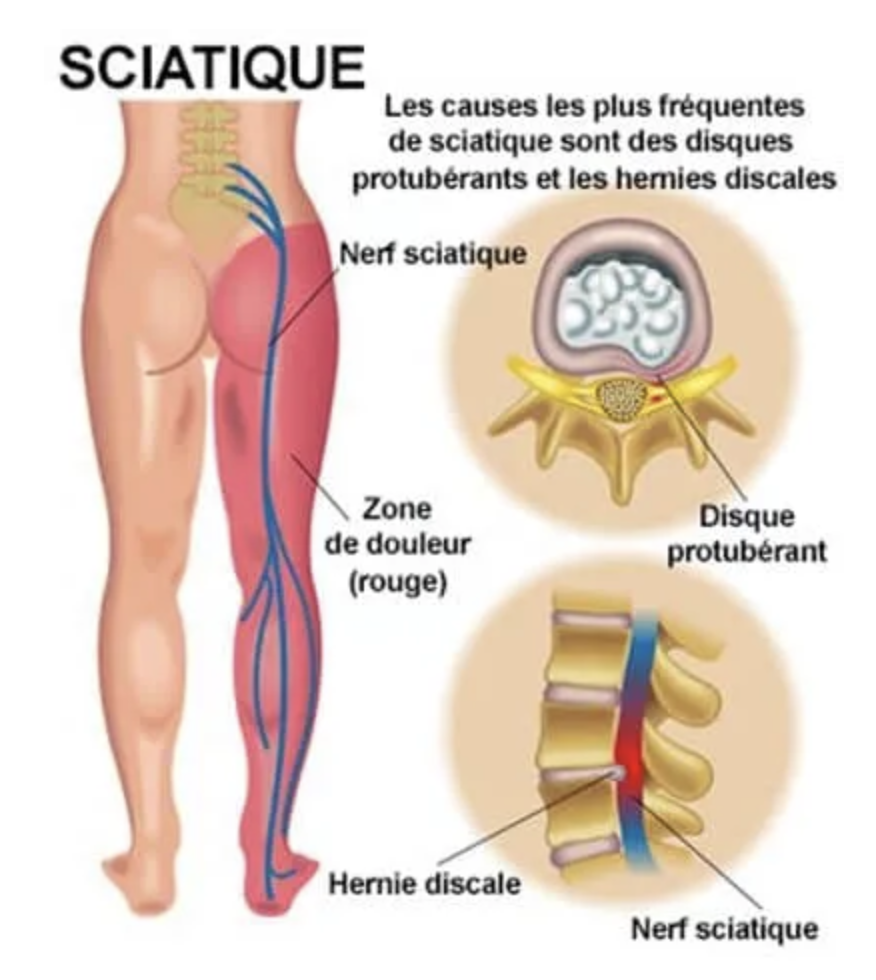
The sciatic nerve is the largest and longest nerve in the human body. It is formed by several nerve roots that emerge from the lower spine (L4 to S3), travel through the pelvis and buttock, continue along the back of the thigh and branch into the lower leg and foot.
When one of these nerve roots becomes irritated or compressed, pain and other neurological symptoms may develop anywhere along the course of the nerve. This pattern of symptoms is commonly known as sciatica.
Although many people think of sciatica as a back problem, leg pain is often the most troublesome symptom. In some cases, the pain in the leg may be more intense than the discomfort felt in the lower back.
What does sciatica feel like?
Sciatica affects people differently. Symptoms vary depending on the cause of the nerve irritation, the structures involved and the severity of the condition.
Common symptoms include:
- Pain that radiates from the lower back or buttock into the thigh, calf or foot.
- Burning, shooting or electric shock-like pain.
- Tingling or "pins and needles."
- Numbness affecting part of the leg or foot.
- Muscle weakness.
- Pain that worsens after prolonged sitting.
- Increased discomfort when coughing, sneezing or straining.
- Difficulty walking or standing for long periods.
Sciatica most commonly affects one side of the body, although bilateral symptoms can occur in certain conditions and require careful assessment.
The intensity of symptoms often fluctuates throughout the day. Some people experience sharp pain during certain movements, while others describe a constant aching or burning sensation.
Si les symptômes apparaissent soudainement ou s'accompagnent d'une faiblesse sévère des jambes ou de changements de la vessie/des intestins, consultez immédiatement un médecin.
What causes sciatica?
Sciatica is a symptom rather than a disease. Several different conditions may irritate or compress the sciatic nerve.
Lumbar disc herniation
A lumbar disc herniation is one of the most frequent causes of sciatica, particularly in younger and middle-aged adults.
When part of an intervertebral disc protrudes, it may irritate or compress a nearby nerve root, leading to pain that travels into the leg.
Not every disc herniation causes symptoms, however. Many people have disc changes visible on MRI without experiencing pain.
Degenerative changes
As we age, the joints, discs and ligaments of the lumbar spine naturally change over time.
These age-related changes may reduce the available space around the nerve roots, contributing to sciatic symptoms in some individuals.
Lumbar spinal stenosis
Lumbar spinal stenosis occurs when the spinal canal narrows, reducing the space available for the nerves.
Symptoms often develop gradually and may worsen during prolonged walking or standing, while bending forwards or sitting may provide temporary relief.
Pregnancy
Hormonal changes, altered posture and increased mechanical load during pregnancy may contribute to irritation of the sciatic nerve or surrounding structures.
Although sciatica is less common than general pregnancy-related pelvic or low back pain, it can occur and should be properly assessed.
Piriformis syndrome
In some cases, the sciatic nerve may become irritated as it passes near or through the piriformis muscle in the buttock.
This condition is less common than disc-related sciatica but may produce similar symptoms.
Other possible causes
Less commonly, sciatica may be associated with inflammatory conditions, spinal injuries, infections or other medical disorders.
A thorough clinical assessment helps determine whether further investigation or referral is required.
Is every pain that travels down the leg is sciatica .
No.
Pain radiating into the leg is not always caused by irritation of the sciatic nerve.
Other conditions can produce similar symptoms, including:
- Referred pain from the lumbar joints.
- Sacroiliac joint dysfunction.
- Hip disorders.
- Muscle injuries involving the gluteal region.
- Peripheral nerve irritation.
Because several conditions can mimic sciatica, an accurate diagnosis is essential before beginning treatment.
How is sciatica diagnosed?
Your chiropractor begins by taking a detailed medical history to better understand your symptoms and identify any factors that may be contributing to your pain.
You will be asked about:
- When your symptoms started.
- Where the pain travels.
- Activities that worsen or relieve your symptoms.
- Previous episodes of back or leg pain.
- Your general health and medical history.
A comprehensive physical examination follows and may include:
- Assessment of lumbar spine mobility.
- Neurological examination.
- Muscle strength testing.
- Reflex assessment.
- Sensory testing.
- Orthopaedic tests such as the Straight Leg Raise or Slump Test when clinically indicated.
This assessment helps determine whether your symptoms are consistent with sciatica and whether chiropractic care is appropriate.
Medical imaging such as MRI is not routinely required for every episode of sciatica. It may be recommended when symptoms are severe, progressive or suggest an underlying condition requiring further investigation.
How Chiropractic Care May Help ?
Sciatica can affect much more than your lower back. Pain, numbness or weakness in the leg may make everyday activities such as walking, driving, working or exercising increasingly difficult.
Because every case is different, chiropractic care is never based on symptoms alone. Treatment begins with a thorough clinical examination to understand why your sciatic nerve has become irritated and to determine whether conservative chiropractic care is appropriate for your condition.
Your personalised care plan is designed to reduce pain, improve mobility, support nerve function and help you return safely to your normal activities.
A Personalised Assessment
Your first consultation focuses on understanding the complete picture rather than simply treating where it hurts.
Your chiropractor will discuss:
- When your symptoms began.
- How the pain has changed over time.
- Activities that increase or relieve your symptoms.
- Previous episodes of low back pain or sciatica.
- Your occupation and daily activities.
- Your medical history.
- Any warning signs that may require referral for further medical assessment.
A comprehensive physical examination follows and may include assessment of:
- Lumbar spine mobility.
- Pelvic and hip movement.
- Muscle strength.
- Sensation.
- Reflexes.
- Nerve tension tests.
- Walking pattern and posture.
This evaluation helps determine whether your symptoms are consistent with sciatica or whether another condition may be responsible for your leg pain.
Restoring Healthy Movement
The lumbar spine, pelvis and hips work together during almost every movement you make.
When one or more joints lose normal mobility, surrounding tissues may compensate, increasing mechanical stress on the lower back and potentially contributing to nerve irritation.
When clinically indicated, chiropractic adjustments and joint mobilisation techniques may help improve spinal movement and restore more efficient joint function.
Every technique is carefully adapted to your age, general health, symptoms and comfort level.
Reducing Muscle Tension
People experiencing sciatica often develop protective muscle tension around the lower back, buttocks and hips.
Although this muscular response is normal, persistent tightness may contribute to stiffness, discomfort and reduced mobility.
Depending on your examination findings, treatment may include manual therapy techniques designed to improve soft tissue mobility and reduce excessive muscle tension.
When appropriate, Dry Needling or therapeutic cupping may also be incorporated into your management plan as complementary treatment options.
Supporting Nerve Mobility
Healthy nerves need to move freely as the body bends, walks and changes position.
When irritation develops, normal nerve movement may become restricted, contributing to pain or increased sensitivity.
When clinically appropriate, your rehabilitation programme may include gentle nerve mobility exercises designed to improve movement tolerance while respecting your symptoms.
These exercises are always introduced progressively and only when suitable for your individual presentation.
Helping You Return to Everyday Activities
Many people naturally reduce their activity levels because they fear making their sciatica worse.
In most cases, however, prolonged inactivity is not recommended.
Your chiropractor will help you understand which activities can usually be continued safely, which movements may require temporary modification and how to gradually increase your activity level as your symptoms improve.
The goal is not simply to reduce pain but to help you regain confidence in your body's ability to move comfortably again.
Personalised Rehabilitation Exercises
Exercise plays an important role in both recovery and long-term spinal health.
Rather than providing the same programme to every patient, your chiropractor develops exercises based on your individual examination findings and recovery goals.
Depending on your condition, your rehabilitation programme may aim to:
- Improve lumbar and pelvic mobility.
- Restore flexibility where appropriate.
- Improve core stability.
- Strengthen the muscles supporting the spine.
- Improve balance and movement control.
- Increase endurance for everyday activities.
- Support a gradual return to work and sport.
- Reduce the likelihood of future episodes.
Exercises are reviewed regularly and adjusted as your recovery progresses.
Recovery: How Long Does Sciatica Last?
One of the most common questions people ask is how long recovery will take.
The answer depends on several factors, including the underlying cause of your symptoms, their severity, your general health and how long the nerve has been irritated.
Many people notice gradual improvement over several weeks with appropriate conservative management, while others may require a longer rehabilitation programme.
Your chiropractor will monitor your progress throughout your care and adapt your management plan according to your recovery and individual goals.
It is important to remember that recovery is rarely perfectly linear. Temporary fluctuations in symptoms are common and do not necessarily indicate that your condition is worsening.
Preventing Future Episodes
Although it is not always possible to prevent sciatica completely, several lifestyle habits may help reduce unnecessary stress on the lumbar spine and support long-term spinal health.
Your chiropractor may provide personalised advice on:
- Safe lifting techniques.
- Workplace ergonomics.
- Sitting posture.
- Physical activity.
- Returning to exercise.
- Sleep positions.
- Weight management when appropriate.
- Home exercises designed to maintain spinal mobility and strength.
Learning how to manage your spine between episodes is often one of the most valuable parts of long-term care.
What Can You Do at Home?
Simple self-care strategies may help you stay as comfortable as possible while recovering.
Depending on your individual situation, your chiropractor may recommend:
- Remaining as active as your symptoms allow.
- Taking short walks throughout the day.
- Avoiding prolonged bed rest.
- Changing position regularly if sitting for long periods.
- Using heat or ice when appropriate.
- Following your prescribed home exercise programme.
- Gradually returning to normal activities as your symptoms improve.
Every case is different, so recommendations should always be tailored to your specific condition.
When Should You Seek Immediate Medical Attention?
Although most cases of sciatica improve with conservative care, certain symptoms may indicate a more serious underlying condition and require urgent medical assessment.
Seek immediate medical attention if you experience:
- Sudden or progressive weakness in one or both legs.
- Loss of bladder or bowel control.
- Numbness around the inner thighs, buttocks or genital area (saddle anaesthesia).
- Severe pain following significant trauma, such as a fall or road traffic accident.
- Fever, chills or unexplained weight loss associated with back pain.
- Constant pain that is not relieved by rest or changes in position.
- Symptoms affecting both legs at the same time.
- A rapid worsening of your neurological symptoms.
Your chiropractor is trained to recognise these warning signs and will refer you to the appropriate healthcare professional whenever necessary.
Living Well with Sciatica
Recovering from sciatica is about more than simply relieving pain. It is also about restoring confidence in movement, improving spinal function and reducing the likelihood of future episodes.
Every patient has different goals. Some want to return to work comfortably, while others hope to get back to running, cycling, lifting weights or simply enjoying everyday life without constant discomfort.
With an accurate diagnosis, an individualised management plan and appropriate rehabilitation, many people are able to progressively resume the activities that matter most to them.
Frequently Asked Questions About Sciatica
Explore Related Conditions
Sciatic symptoms can be influenced by different structures of the lower back and pelvis. Understanding the possible causes can help you find the most appropriate approach for your recovery.
- Low Back Pain – Understanding common causes of lower back discomfort.
- Lumbago – Learn about sudden episodes of acute back pain.
- Herniated Disc – Understanding disc-related nerve irritation.
- Chiropractic Care – Discover how a personalised chiropractic assessment works.